
Just about time to head off to WisCon. I’m looking forward to a weekend of passionate, buoyant geekery. Getting to run Blade & Crown tomorrow night will be an added bonus! I hope to see you there. Expect more early next week.
 In my multi-year Blade & Crown campaign, a weird thing happened a couple sessions ago. A player rolled some dice. They then decided to use a Trait. Adding the Trait caused their roll to go down!
How did that happen? I don’t remember the exact rolls involved, but I think it went something like this: Their roll started with three 5s, totalling 7. Even with the modifier for an evocative and original description, they’d only get up to a Stalemate, so they decided to use a Trait. That contributed one more die, on which they rolled a 6. Suddenly, the highest result was a 6 — not higher than the total for the previous dice, but still the highest single result. So adding their Trait actually reduced their overall result. Weird!
How to deal with this? Personally, I think it’s rare enough (once out of hundreds of rolls, so far) that it isn’t really statistically important. But if you want a rule for it, I suggest one of the following:
Using a Trait cannot cause your roll to go down.
In the event that the bonus for multiple dice conflicts with the single highest result, always take the higher possible result.
 Having had it recommended to me many times, I finally watched the movie Ofelas (Pathfinder) recently. It lives up to the reviews; what a good find!
It’s set in northern Scandinavia, in the land of the Sami people (sometimes incorrectly called “Lapps”). The story is apparently very old; according to the movie, it dates back 1000 years. It’s very much a swords, bows and knives kind of tale.
I knew almost nothing about the plot in advance, and I didn’t recognize any of the performers. The story is very straightforward, but not predictable. For those reasons, I found Ofelas very compelling; I was able to immerse myself in it without being distracted by Famous Actor’s quirks or by knowing that scene X or Y was coming up soon.
What is the plot? Well, I want to keep it surprising and compelling for you, too, so I won’t spoil it by saying too much. Suffice to say, a young man, Aigin, returns from hunting to find his family killed by some nefarious Tchudes. (The Tchudes are thoroughly evil. I won’t spoil it, but there are some great scenes depicting their ruthlessness. And the filmmakers apparently decided to make sure their Tchudes didn’t resemble any real ethnic group, so they had them speak a nonexistent language. I wonder if a conlang was involved?) Aigin treks back to a nearby village to get help, which causes a rift among the villagers: should they help him, or flee the marauders who Aigin has undoubtedly led right to them?
Ofelas has tons of inspiration for gaming:
- The film features some great action sequences, with bows and blades used to equal measure.
- The landscape is beautiful. I now want to have an action scene set on the side of a mountain, or on a rolling snow-filled hillside.
- Especially worthy of note: The beautiful snow-drifted landscape necessitates travel by skis, which now has me thinking of ways to work a ski chase into one of my Blade & Crown games. (I think there may be some Mountain People of Morensia who get around on skis.)
- The ability to track one’s prey — animal or human — is crucial in the film, and it gives a few interesting ideas for how to turn a tracking roll into a surprising and important plot point.
The village’s shaman is a great character. There are many touches that make his magic seem mysterious, powerful and rare — very inspirational for gaming, where that is just how I like my esoteric powers to be. And the actor does a great job of filling the character with penetrating wisdom and charisma.
The movie is very male-centric; women are mostly around to provide motivation for the men. But the alertness of the main female character, Sahve, proves crucial in one scene.
All in all, a pretty great movie. Definitely one to watch if you’re looking for ideas for a snowy fantasy game.
 If you missed my Mountain Monastery Mystery at Con of the North, you’ll get another chance to play it this coming Memorial Day weekend (May 23-26) at WisCon!
WisCon is a wonderful convention with amazingly deep conversations, but it hasn’t had much gaming of late — a pick-up game of Dominion or Zar here or there, but nothing scheduled, and gaming has not been a major focus of the con. The head of gaming is making a concerted effort to have more scheduled games, and I’m happy to be one of the folks running a game at this year’s con. The Monastery Mystery, with its various gender issues, seems a good match for WisCon. If you’re going to be at the con, I’d love to see you in my game!
 I didn’t do a whole lot of gaming at Minicon 49. A hoped-for game of Star Traders didn’t pan out. But I played a bit of Zar; played a couple rounds of Moneyduck (our local variant of EPYC) as well as taking part in the final Mega-Moneyduck reveal; ran the previously mentioned Build a World!; and had some nice chats about gaming and RPGs. And I think I might’ve played some other games that are just not registering in my mind right now.
Overall, Minicon 49 was pretty dang good. There were some scheduling hiccups, but other than that, it went really well. Lots of great conversations, some excellent programming, good food, a great atmosphere and good gaming. As always, well worth the effort.
One of my favorite panels of the con, this was Saturday afternoon:
Terra Incognita: The Role of Maps in SF&F Literature
A discussion of maps used in speculative fiction, either as endpieces or as part of the story. What are good (and bad) examples of maps of imaginary worlds? Can the inclusion of maps create problems? What can maps tell us of the modes of transportation, natural setting, and politics of the realm? Are maps for modern fantasy novels too modern (i.e. accurate)?
I’d wanted to be on it, lover of maps that I am, but it didn’t work out. Also, I tried to record it, but discovered too late that the app I was using had no way to output a sound file. Yuck! Unfortunately, that means I wasn’t taking notes as well as I’d like, so my memory of the panel is a bit fuzzy.
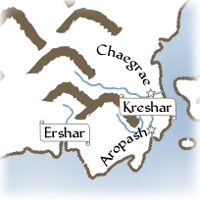 Panels about maps and mapping, in my experience, tend to carry one of two primary messages:
- Maps are a fixture of fantasy, and therefore a sign of lowly, shameful nerddom. Avoid them, lest you be mistaken for a geek. Your only hope for becoming a Published Author of Prose Fiction is to put away maps and other childish things.
- Maps are fun. They can be fun, they’re evocative, they help people orient themselves, and they help things stay consistent. If they’re well done.
In case it’s not clear, I thoroughly disapprove of message #1. Too many people seem to think that the sole purpose of fandom is to cast off all geeky things and become a Published Author of Prose Fiction, and to wallow in geek self-loathing as part of that, and to dis maps as a result.
Luckily, this panel was of the second variety. Marissa Lingen remarked about this early in the panel. As she said, she’d been on a similar panel recently where the panelists had mostly agreed that maps are bad (useless, a distraction, unprofessional or something of that nature — I didn’t catch exactly how she described it). She found it remarkable that everyone on this panel was so pro-map. (Not that she’s anti-map; she just found the contrast interesting.) It was very refreshing.
The panelists discussed the uses and misuses of maps in a quite evenhanded way. One major purpose they identified for maps was just evoking a feeling. This is certainly true! When I look at a map, I can quickly be drawn into the experience that it represents: Ooh, why does Yrkalia control this little section of the mainland, even though it’s clearly based around the Semelt Valley? What must it be like to travel the Jade Road from Semelt to Cherus? How did the border forts of Cherus evolve? A well-constructed map will tell you a huge amount of information about the setting and draw you in. Of course, a poorly-constructed map can conceal or obfuscate things that it shouldn’t, but that’s more a matter of quality of execution than anything innate to maps themselves.
Another major use is for the person viewing the map (reader, player, or author) to orient themself. If you’re describing where Semelt is in relation to the cities of the Jade Road, it can be really confusing to keep three or four different locations straight in your head. If the specific orientation doesn’t matter, that’s fine; but if the orientation is an important part of what’s happening, using prose only is a disservice to all concerned. I remember reading Downbelow Station by C. J. Cherryh and being thankful many times for the station diagrams at the beginning of the book; I would’ve been quite confused without them. And the same goes for the maps in the Middle Earth books, and the map in The Name of the Rose for that matter. And while I was reading Against a Dark Background, I ended up drawing the Thrial system for myself, because I needed a map to keep it all straight. (Iain Banks was a great author, but his descriptions of location often confuse me.)
Of course, it’s possible for a map to be an unnecessary distraction, geek self-loathing aside. If the movement of the story doesn’t actually require a map, there’s no particular need for one. If the characters themselves are disoriented, it can be counter-immersive to present a detailed map. Eleanor Arnason noted here that, in Woman of the Iron People, she deliberately used a map that is completely useless — it gives no location names, and doesn’t really help the reader orient themselves at all. I laughed out loud at this. While reading the book, I’ve frequently found myself saying “Why is this map here? Is this a Daoist map?”
A large part of the panel’s time was devoted to the ways in which maps can help authors keep a story oriented, and make sure the worldbuilding makes sense. This is of course huge. If you give the characters a carefree journey down the river from Semelt to Cherus, but later on you state that the river is controlled by the evil Lord Brocos, a map could help prevent that kind of inconsistency.
Maps can backfire, too. As the panel noted, you might state that it takes three days to get from Semelt to Cherus by horseback, only to have your audience check your map and notice that the two places are only five miles apart. Your map has then caused you some trouble — though it’s perhaps arguable that your worldbuilding is where the fault actually lies, and the map has just revealed an underlying problem.
And using a map to achieve consistency and believability requires some basic geographic knowledge, regardless of who’s using it. Ruth Berman described a story she’d seen in which two characters valiantly go over a waterfall… while going upstream, away from the coast. D’oh!
The panel went into a lot of other fun topics, and I found myself alternately laughing at the humor and marveling at the insight. I wish my recording had worked; I could relay even more cool stuff. But in case, it was a great panel.
 My standards for fantasy magic: it should, I believe, be mysterious, powerful and rare. This is my preference in all fantasy RPGs, especially Blade & Crown.
As I was designing B&C, the powerful part wasn’t hard to work out. Magic gives players a degree of control over the narrative, which is in some ways the ultimate power in an RPG. And the bigger the magnitude, the bigger the narrative control.
Mysterious? My biggest effort here was deliberately keeping the effects of magic vague. The spell descriptions are a couple sentences long at most, and I deliberately kept quantification to a minimum. I find that quantification is the enemy of quality, when it comes to magic.
Rare is defined largely by the difficulty in finding nodes. As I wrote in B&C, nodes shouldn’t be found just anywhere, and not even randomly. It’s important that the GM place them as is appropriate to the drama of the game. Finding a high-powered Crystal node should require, for example, journeying through a snow-covered waste for weeks — not just happening upon the node lying in the middle of the street.
However, even these standards can still lead to mechanistic, rigidly quantified magic. To be honest, I think it’s hard to quantify magic without losing some of the mystery. Once the mage knows that their Magnitude 2 node will produce exactly 517°C in temperature change per cubic meter of water, magic is no longer magical — it’s become engineering instead. (And if that’s the kind of magic you want, cool! But that’s not my preference, nor my design principle for Blade & Crown.) There is a strong inclination in gaming to quantify as much as possible, but I think that, especially when it comes to magic, quantification is usually at the expense of mystery.
Another thing that can allow magic to become mechanistic is convenience. If magic is easy to access, then it can become not just engineering, but commonplace technology.
In Blade & Crown, one of the places where I think this manifests most clearly is how nodes recharge: at a rate of 1 day per Magnitude level. This makes node regeneration quite regular and predictable — perhaps too regular and predictable.
A way to deal with this is to make the precise moment of regeneration unpredictable, or mystical. If the mage doesn’t know whether their node will recharge at midnight or at dawn, at the rising of the Moon or at the setting of the Plow, then they can’t rely on their nodes in a mundane way.
However, an experiment I’d like to try changes node regeneration in a more fundamental way. In this experiment, recharging a node requires sacrifice. The higher magnitude the node, the greater the sacrifice.
The type of sacrifice should clearly be aligned with the node’s element. Perhaps a Life node would require you to donate a bit of your own blood to give the node renewed energy; perhaps a Dark node would require meditation in a completely darkened room. A Light node might require candles to be burned in a particular way; an Earth node might require planting or nurturing something.
The degree of sacrifice should, of course, equal the magnitude of the node. A 1st magnitude node might require only a few hours of work; a 9th magnitude node might require a lifetime of dedication.
And of course the sacrifice needn’t be physical. Instead, a Crystal node might require you to act in a cold, calculating way; a Fire node might require sudden passion; a Metal node might require resolute endurance in the face of extreme danger.
And if that kind of sacrifice is required, then nodes resemble Traits even more than they already do. In exchange for harnessing mystical power, the mage is required to drive the plot forward. Great control over the narrative power then requires great contribution to the narrative — a good way to keep magic mysterious, powerful and rare.
 Again inspired by the Build a World events run by Ben Rosenbaum at WisCon, and encouraged by previous iterations of this activity, I did a session of this at Minicon 49. We were inspired by the con’s official theme (Pirates & Airships*) and eventually created a world populated by carnivorous bananas who are conspiring against their parrot overlords with their allies, the telepathic platypi. There were airships, monorails laid down by hamster in giant hamster balls and a Bananasiah. And, it seems, every time the group wants to have floating islands, so those worked their way in again. Yes, it got pretty silly, pretty quickly.
Someone asked me afterwards if these things ever stay serious. I still wonder a lot about this! It’d certainly be interesting to try, though I’m not sure if a group of strangers can form a functional, serious social contract that quickly and still have time left over for worldbuilding.
In any case, it was a lot of fun — a good last activity for Friday night. I hope Let’s Build a World becomes a regular thing at Minicon.
* Some assembly required — or other, similar parentheticals
 I’ve updated the sample Blade & Crown character downloads again. I found more typos in them last night. The joys of a single-person operation!
Please let me know if you find any other inaccuracies in the characters or any of the other downloads. Thanks!
After “Fandom or Fandoms”, I had a choice between two panels that both looked pretty good: “Navigating The World Of Small Press Publishing” or “The State of Art in the Gaming Industry”.
Navigating the World of Small Press Publishing
How does an author break into the world of small press publishing? What benefits do small publishers offer? What should new authors be wary of?
The State of Art in Gaming
What is art’s impact on content, style, jobs/work opportunities now and into the future of the gaming industry? What is up now in the gaming art world, and what is just around the corner? From a player’s perspective, how does art influence a game?
Which one to go for? Both seemed right up my alley, hopefully covering various aspects of being a small-time publisher, which I am. Discussing art and artists for games sounded very interesting, but “Small Press Publishing” made mention of Kickstarter, which I’ve been trying to wrap my brain around lately. So I tried that one first.
Unfortunately, that panel turned out to assume everyone wants to publish prose fiction — novels, and to a lesser extent, short stories. Not at all what I wanted.
Why is this assumption — that all fans should aspire to becoming published authors of prose fiction — so prevalent? Why is “publishing” taken to automatically mean publishing novels and short stories? Why is that the default? Not necessarily everyone wants or should want to publish things; and those who want to publish things certainly don’t all want to publish prose fiction. Nor should they! It’s such a wrong assumption in so many ways, yet so much of fannish discourse seems to revolve around it. Blech.
So anyway, I got out of that panel as soon as I realized how skewed its emphasis was, then headed for “State of Art in Gaming”.
I’m glad I did; it turned out to be quite a good panel. It covered many aspects of art in games, from how art direction works to how art helps instill mood in a game. The art direction segments were a highlight, with discussion of how (bigger) publishers sometimes ask artists to create very particular things, or sometimes request something vague (‘there has to be a sword’ or whatever). They related one example of a magic card where Daniel Dos Santos (I think it was) did an illustration for a Magic: the Gathering card, and the illustration didn’t work — but Wizards liked the illustration so much that they created a new card based around it.
I asked a question about one of the most difficult topics for small publishers: how do we get art that a) we can afford yet b) doesn’t ask artists to sell their work too cheaply?
Lindsay Nohl, one of the panelists, gave some really good answers to this. She mentioned how a game might be a true collaboration between artists and publisher, as a recent card game she worked on was. The artists were intimately involved in creating the game; I think there was no separation between artists and mechanics designers at all, if I understand right.
She also said that some artists may truly get into a publisher’s project for the long haul. Yet there’s a weird space between desire to do the work and desire to get paid. If they’re in it for the long haul, too, that seems to assume a relatively large publisher, and a project that will eventually become a huge success — increasingly unlikely in an ever-more-fractured and ever-more-niche market, I think. And, I think, it’s not ethical to lean on artists’ passion for their work in an attempt to get cheap art.
This was obviously something I struggled with in publishing Blade & Crown. I could’ve tried to entice up-and-coming artists with promises of “exposure”, but that’s both BS and immoral. I could’ve waited even longer to publish it while I got up the funds for better art, I could’ve used the same stock art so many other publishers have paid for… Or I could’ve done what I did, which was publishing with a mix of hopefully-obscure-yet-effective public domain art and my own illustrations.
She also mentioned how Kickstarter can help small publishers pay a decent amount for art. And the panel discussed Kickstarter in general: how it’s changed the game publishing industry, making possible smaller, riskier projects that weren’t possible before. And how it allows publishers to get a sense of the demand for a product, and how it acts as a combination of insurance and market survey. I wish they had discussed the actual process of creating a Kickstarter more — as I said, this has been much on my mind of late — but that probably wasn’t exactly on track.
 At one point, the panel was discussing art in computer games, and Lindsay talked a bit about Darklands and its gorgeous illustrations and glorious isometric combat maps. (Interesting that there’s been so much in my life about Darklands recently — I may have to fire it up again sometime in the near future.) I mentioned how the cover art had gone on sale a year ago, and we geeked out about Darklands a bit. It’s relatively rare to meet someone who’s even heard of Darklands, much less an enthusiastic proponent of it, so that was a nice addition to a panel that was already great.
Apparently, back in the “Small Press Publishing” panel, there was some discussion of art & artists that went… um… badly. I don’t know enough solid details to go into it more; I’ll just say that I’m doubly glad I went to “State of Art in Gaming”.